

Luxury, reconsidered: What’s coming next?
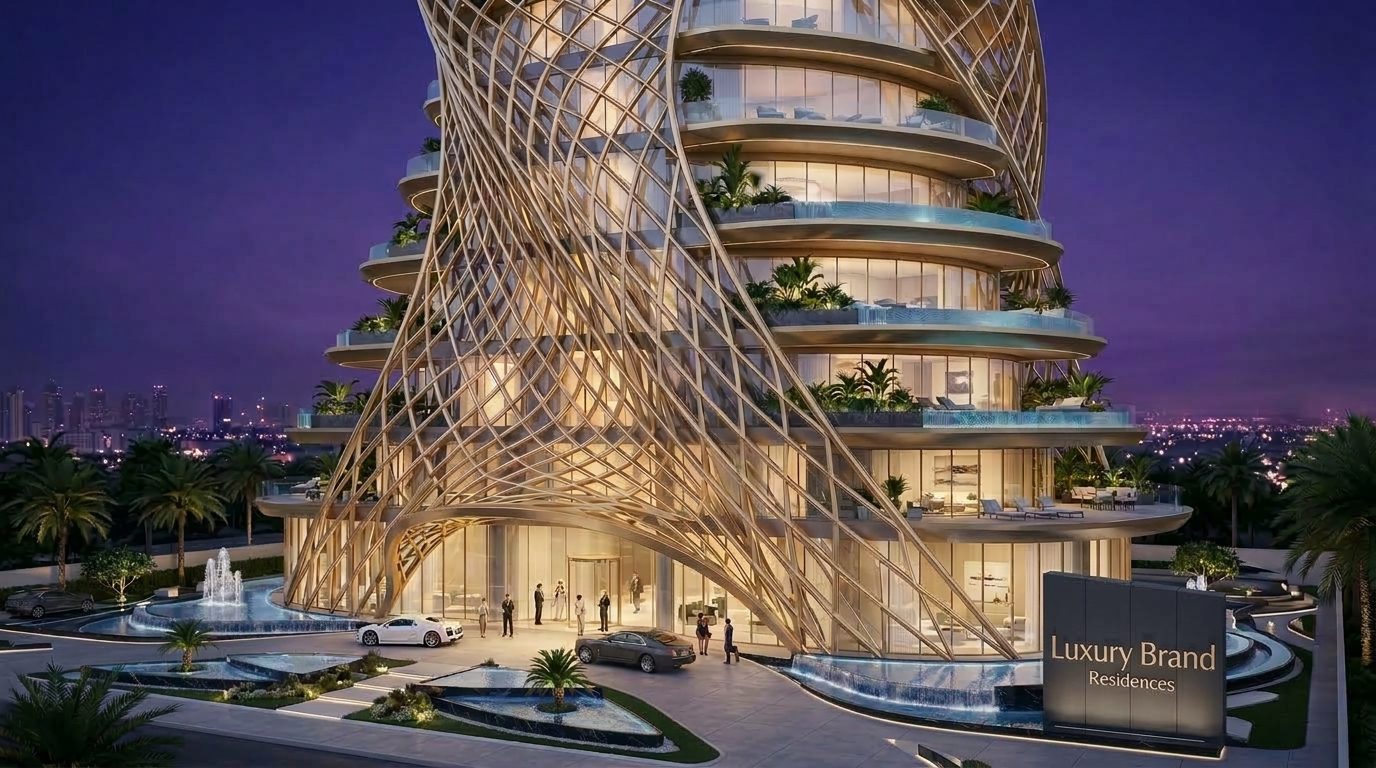
"Luxury" is now one of the most used terms in Australian property marketing.
It is also one of the most diluted. Marble benchtops, European appliances, floor-to-ceiling glazing, even the soft-close toilet seat, were once genuine differentiators. They now appear as standard inclusions across a wide range of price points and suburbs. When the term applies this broadly, it stops describing anything specific.
The market has already begun answering this saturation, and the direction is clear once you look globally. Branded residences, developments built in structured partnership with fashion, hospitality or automotive brands, are the fastest-growing segment in global luxury real estate. Knight Frank’s Global Branded Residence Survey 2025 forecasts the number of branded developments worldwide will rise by 59 per cent in the five years to 2029. This is not a niche trend. It is a structural shift in how the top of the market signals genuine scarcity once earlier signals become common.
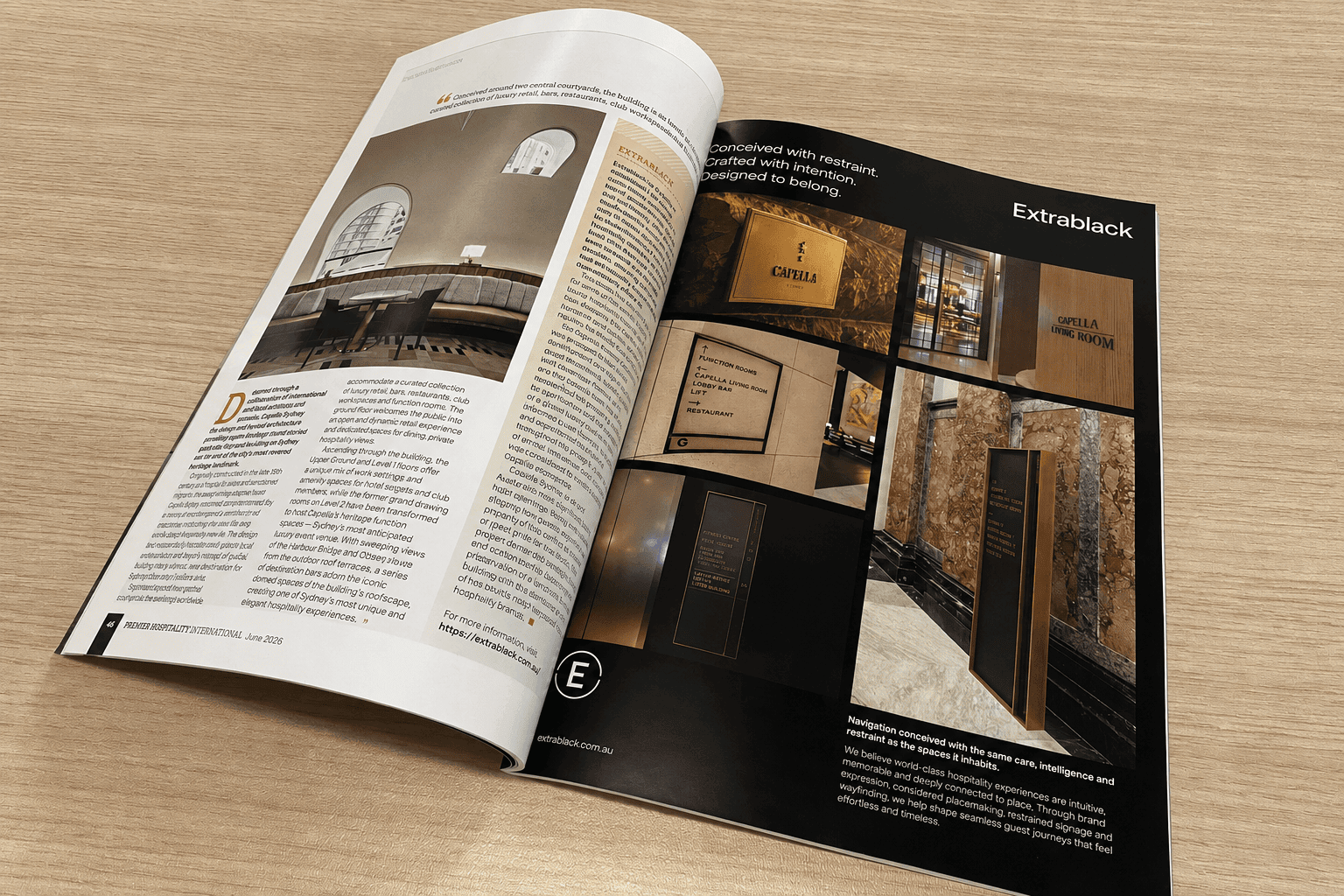
The Extrablack team have worked with some of the world's most exclusive hotel brands.
Extrablack is currently working with Capella Hotels and Resorts, across its Capella Sydney and The Lands by Capella properties. That work sits us close to this shift as it lands in Australia. Capella has partnered with Verso to deliver Brisbane Residences, Australia’s first Capella-branded residences, set within the historic Shafston Estate. The development pairs architecture by Kerry Hill Architects with interiors by 1508 London, and includes a private members’ club and a dedicated two storey wellness sanctuary reserved exclusively for residents. Armani has landed too, partnering with Lendlease on Cove, Australia’s first branded fashion residence in Sydney, a whole-floor sub-penthouse at One Circular Quay finished by Armani/Casa. Both projects place Australia, for the first time, alongside the global cities where branded living has been established for years.
The uplift a brand partnership brings is not cosmetic. It is design provenance, a global standard of craftsmanship, and a service relationship that extends beyond the residence itself. Capella’s philosophy of crafted living and intuitive service, and Armani’s handmade Italian finishes, are difficult for a standard developer to replicate regardless of budget. This is the market’s response to the next level of luxury. It may also be pushing the current definition of local “luxury” down into premium, simply by raising what the top of the category now requires.
Marketing luxury versus Personal luxury
This matters for how the word is used more broadly, because “luxury” is currently doing two different jobs at once, and conflating them is where much of the market’s confusion originates.
Market luxury is the version the industry sells. It is comparative and measurable: scarcity of stock, usually a culmination of location, view and aspect; craftsmanship over factory production; price relative to median; and amenity that separates a building from everything around it. A five-apartment tower with private lift access and hand-finished joinery is luxury in this sense because it is objectively rare. This definition exists to be marketed, benchmarked and compared. It is about standing apart from other properties, and about signalling arrival, not about how any individual feels living there.
Personal luxury is entirely different. It is the gap between what someone has now and what they had before, and it is different for everyone. For a young person leaving the family home, their own front door is luxury. For someone downsizing from a larger house, it might take a private pool to register the same shift. This version has nothing to do with scarcity or craftsmanship. It is emotional, relative, and legitimate entirely on its own terms.
Here is the tension. The industry mostly speaks in market luxury because it is sellable, it justifies price, and it photographs well. But personal luxury is arguably the more honest and more universal experience of the word in our market at the moment. Most buyers are not trying to win a scarcity contest. They buy because something about the space genuinely improves their life relative to where they were. Ambiguity between the two definitions moves buyers to focus on price and risk, rather than on value, which is not a useful outcome for developers or for buyers.
Beyond branding, the next differentiator globally is shifting from appearance to outcome.
Wellness and longevity infrastructure, air and water quality, sleep optimisation, biophilic design, is being built into the architecture itself, as seen in Capella Brisbane’s dedicated wellness sanctuary. Alongside this sits a broader move toward intentionality over excess, and a renewed premium on genuine advisory expertise and trusted counsel, even as digital tools become standard in valuation and marketing. Both trends point to the same shift: luxury increasingly defined by what a property does for its occupant, not simply how it presents.
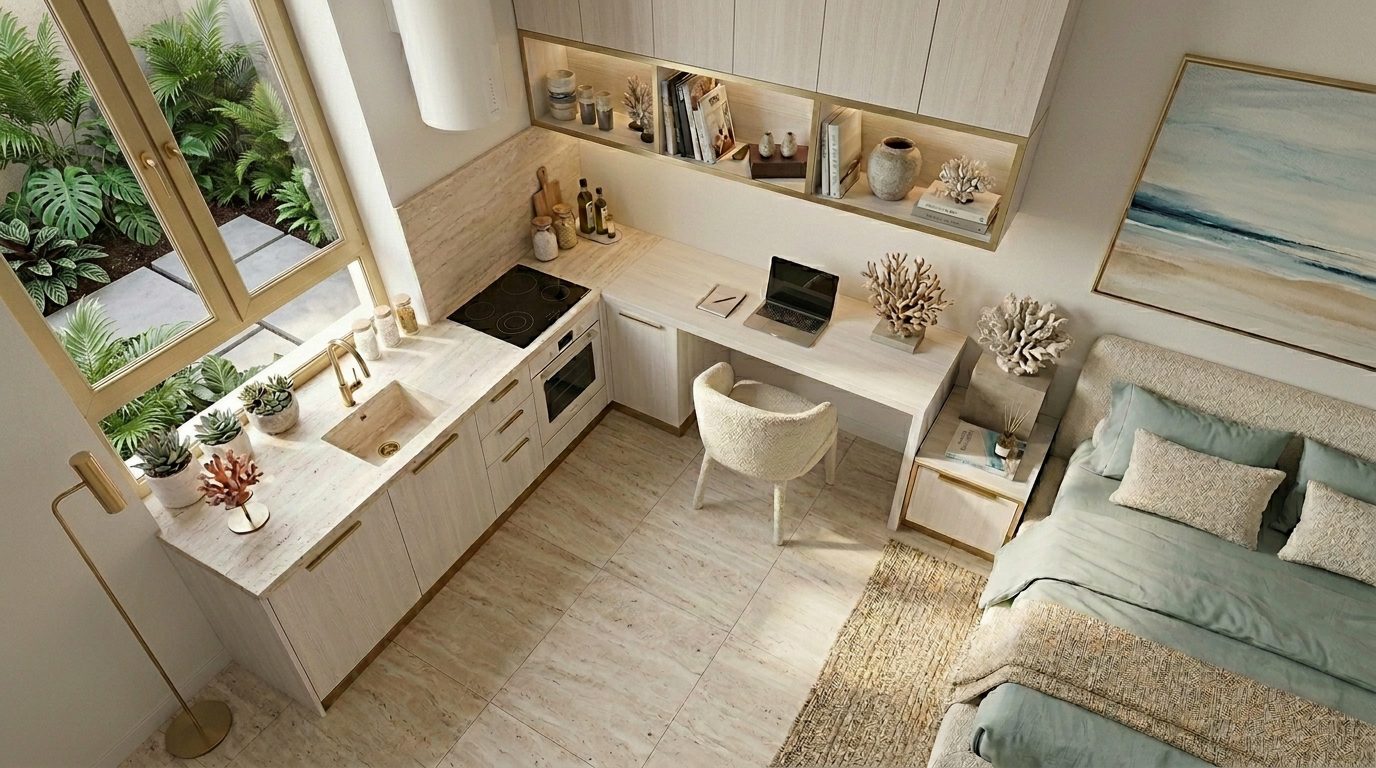
The saturation point at the broader market level is visible in the finishes themselves. A standard apartment, laminate benchtop, vinyl flooring, standard ceiling height, no shared amenity, and a premium equivalent with marble benchtops, integrated appliances, higher ceilings and wellness facilities, represent genuinely different construction propositions. The gap is material, not marginal. It also means the luxury label, once applied indiscriminately, is being used to justify a positioning gap that buyers are increasingly equipped to interrogate.
This creates a defined opportunity for the Australian market, at both ends of the spectrum.
At the top, developers with genuine scarcity, craftsmanship or brand partnership to offer can move toward more precise, brand-led or wellness-led positioning, consistent with where the category is heading globally and now landing locally through projects like Brisbane Residences and Cove. At the standard and premium tiers, there is equal opportunity in deliberate down-specification: quality materials without the marble, considered layouts without the wellness suite, priced honestly for what they deliver. The barrier to this approach is not construction feasibility. It is market perception, where affordable has been conflated with lesser, and where the industry’s habitual reach for luxury language has made honest positioning feel like underselling.
The most credible path forward is precision. Naming a project market luxury when it is genuinely rare, crafted and branded accordingly. Naming a project premium when it is a considered step above standard, without overclaiming. Naming a well-built, fairly priced standard product as a genuine achievement in its own right. Buyers, particularly the younger cohorts now entering the market, are equipped to tell the difference. The opportunity is in being the developer willing to say so first.
Articles
07.05.2026
Shaping the Next Generation of Australian Places
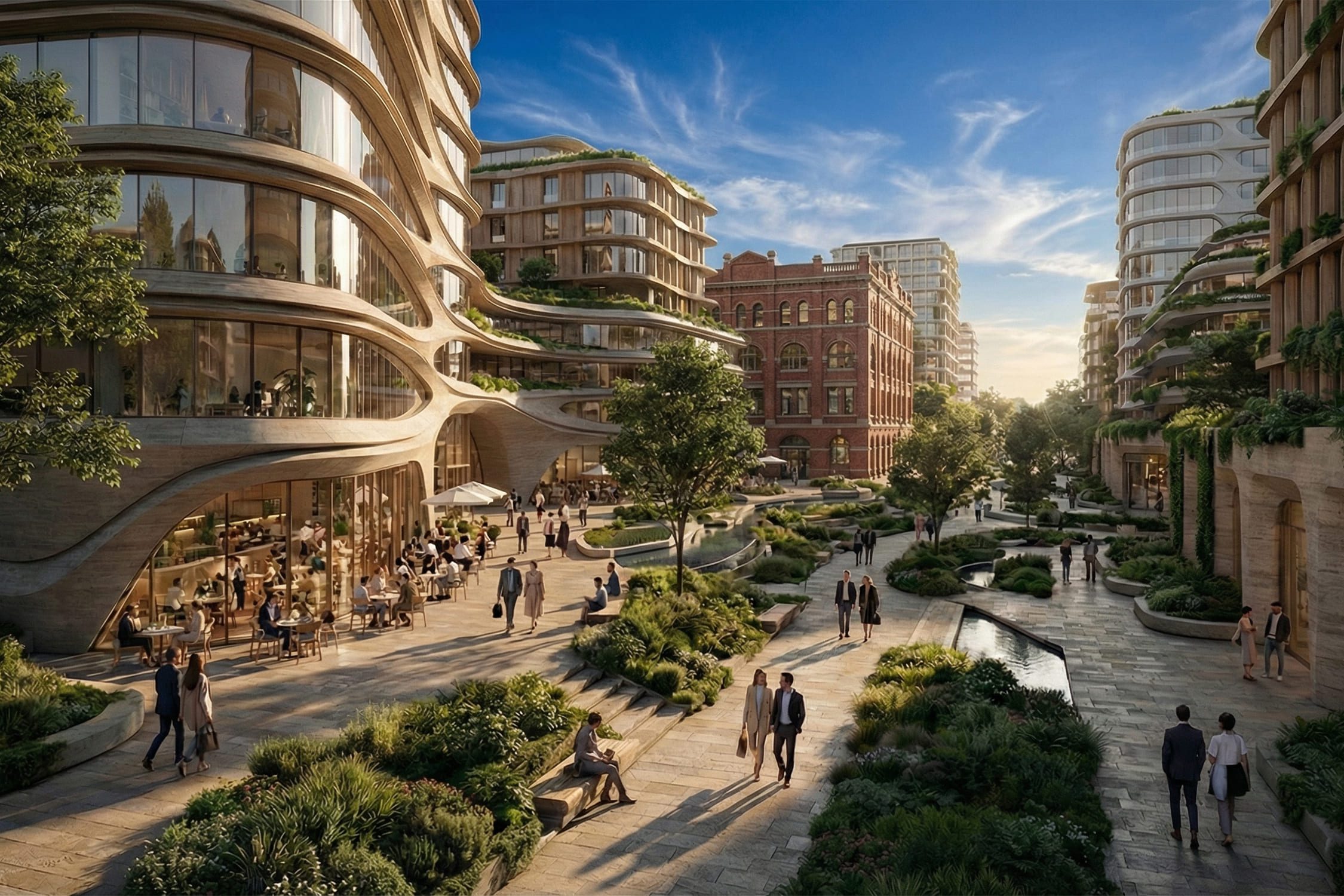
Australia’s cities are entering a more complex phase of growth. From emerging metro corridors to established urban villages, successful developments increasingly rely on strategic placemaking, clear identity and people-focused design to create places that endure socially, commercially and culturally.
Contact
To get in touch...